
The Role of Panchakarma in Managing Fatty Liver Disease
In our modern society, it is common to come across individuals following the “You Only Live Once” (YOLO) practice, intertwining fun, happiness with guiltless overindulgence, and having an experience-rich life. Among pursuit of such activities, however, it is important to bear in mind that we, in fact, have only a single chance to live, and life must be immensely valued.
Undoubtedly, in today’s world, both the youth and adults face one common problem of overconsumption of unhealthy food, which leads to an increasing prevalence of fatty liver symptoms, fatty liver problems, and even fatty liver symptoms in females or fatty liver symptoms in males. These fatty liver reasons are often linked to processed food, alcohol, stress, and poor lifestyle habits, sometimes visible through fatty liver face changes.
This is perhaps a reason why primary allopathic treatments might not work for everyone. While healing approaches for fatty liver treatment differ from one another, it is necessary to note that not every person responds to the same fatty liver medicine, fatty liver tablet, or fatty liver treatment medicine, nor follows the same fatty liver treatment diet.
For individuals looking to adopt a more holistic way to manage fatty liver disease, Ayurveda’s unique ancient method of Panchakarma provides a solution.
This ancient Panchakarma therapy not only works for the body but for the mind and spirit as well. Ayurvedic treatment for liver diseases and holistic health promotion comprises Panchakarma treatments, certain internal medications, and a fatty liver diet, fatty liver diet plan, or fatty liver disease diet, which is an all-encompassing method to restore liver functions. Many people also support this with fatty liver exercise, fatty liver workout, and fatty liver yoga.
What is a Fatty Liver Disease
Fatty liver is a condition characterized by an excess fat build-up in liver tissue that causes inflammation of the liver and damage to some liver cells. In some cases, it is detected through a fatty liver test, fatty liver blood test, or fatty liver ultrasound showing fatty liver grades, and in others, by recognizing symptoms such as fatty liver symptoms in females, fatty liver symptoms in males, or even fatty liver symptoms on skin.
The modern world suffers from this ailment with increased intensity. A sedentary lifestyle, coupled with the increased consumption of saturated and trans fats, is known to raise blood pressure, cholesterol, and triglycerides. Lack of routine physical activity is known to lead to increased cholesterol and blood pressure. Over time, this can cause fatty liver stage 1, fatty liver stage 2, or in severe cases fatty liver is dangerous, resulting in complications.
Some individuals may also experience fatty liver with hepatomegaly, fatty liver pain, and discomfort in the typical fatty liver pain area.
Types of Fatty Liver Diseases
Non-Alcoholic Fatty Liver Disease (NAFLD) is characterized by excess fat accumulation in the liver, also referred to as hepatic steatosis or fatty liver means. It can be diagnosed via a fatty liver test name, fatty liver blood test, or fatty liver picture seen in imaging. Advanced stages sometimes show fatty liver with hepatomegaly. Fatty liver can be associated with several other disorders, including diabetes, high cholesterol, excessive body weight, as well as strong family histories.
On the other hand, Alcoholic Fatty Liver Disease (AFLD) directly stems from chronic and high quantities of alcohol consumption. It ranges from simple fatty liver to alcoholic steatohepatitis, which is the inflammation and damage of liver cells. AFLD has the potential to progress to more serious fatty liver side effects if not treated timely.
Symptoms of Fatty Liver
People suffering from fatty liver disease tend to have an asymptomatic fatty liver in its early stages. However, when the condition worsens or other complications arise, several symptoms may appear. Here are a few fatty liver symptoms:
- Abdominal Fatigue: Persistent abdominal fatigue is largely due to an undiscovered energy disorder linked with liver dysfunction.
- Abdominal Pain: Pain in the upper right quadrant of the abdominal area (a common fatty liver pain area) results from inflammation or enlargement.
- Increased appetite or decreased body mass: Often triggered by inflammation or metabolic imbalances.
- Enlarged Liver: The liver can undergo enlargement (fatty liver with hepatomegaly), causing heaviness or fullness in the abdomen.
- Some individuals also show fatty liver symptoms on skin like pigmentation or dullness.
Role of Panchakarma Treatment to Treat Fatty Liver
Panchakarma is detoxification, rejuvenation, and rehabilitation therapy in ancient Ayurvedic practices. With modern stressors, Ayurvedic Panchakarma Treatment provides cleansing and detoxification. Treatments include individualized herbal therapies, massages, fatty liver yoga, fatty liver exercise, and dietary adjustments.
Here’s how Panchakarma aids in managing fatty liver:
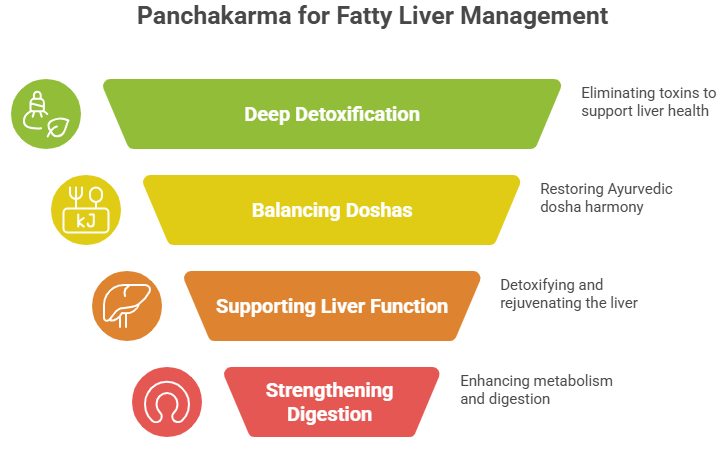
Deep Detoxification: Panchakarma uses herbal procedures aiming to purify the body. Techniques such as Vamana and Virechana aid in toxin elimination. This supports fatty liver reversal, especially when combined with remedies like fatty liver herbal remedies, fatty liver detox drink, or even fatty liver ayurvedic treatment.
Balancing Doshas: Ayurveda states fatty liver may be linked with dosha imbalance. Panchakarma restores harmony, especially addressing Pitta dosha. Many people also consider fatty liver natural treatment, fatty liver curable options, and diet changes including fatty liver best food, fatty liver fruits, and fatty liver foods to avoid.
Supporting Liver Function: These therapies aim to detoxify and rejuvenate the liver. Panchakarma may be enhanced with supplements like fatty liver omega-3. Some doctors also recommend specific fatty liver treatment medicine, fatty liver medicine name, or even fatty liver syrup depending on the severity.
Strengthening Digestion and Metabolism: Abhyanga, Swedana, and Shirodhara enhance metabolism and digestion. Supportive habits like consuming fatty liver coffee, following a proper fatty liver diet plan, and engaging in regular exercise help maintain recovery. Many also learn that fatty liver can be reversed with disciplined lifestyle changes.