Why You Should Never Ignore the 5 Signs of PCOS
Polycystic ovary syndrome (PCOS) is one of the most common hormonal and metabolic conditions in women of reproductive age. Many women live with PCOS for years because the symptoms are brushed off as “stress,” “weight issues,” or “just bad skin.
The earlier you spot the signs and get help, the easier it is to protect your fertility, hormones and long‑term health.
What Is PCOS, Really?
- PCOS is a condition where your ovaries produce higher‑than‑normal levels of androgens (male hormones), disrupting ovulation and affecting your periods, skin, hair and weight.
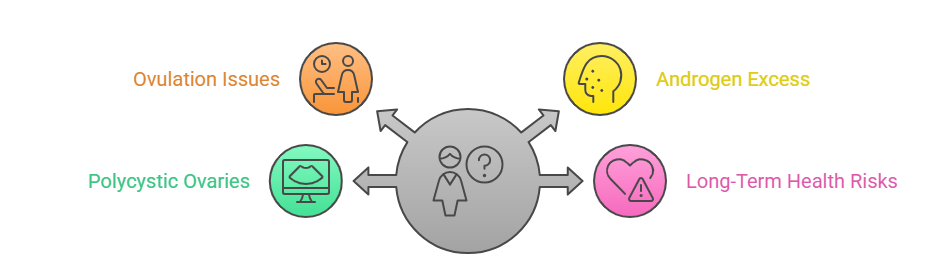
- Doctors look for three core features:
- Irregular or absent ovulation (period issues)
- Signs of excess androgens (acne, facial/body hair, scalp hair thinning)
- Polycystic ovaries on ultrasound (many small follicles
- It’s not “just a period problem”, PCOS is linked to insulin resistance, diabetes, heart disease and mental health concerns over the long term.
Sign 1: Your Periods Are All Over the Place
Ask yourself: Does your cycle feel unpredictable month after month?
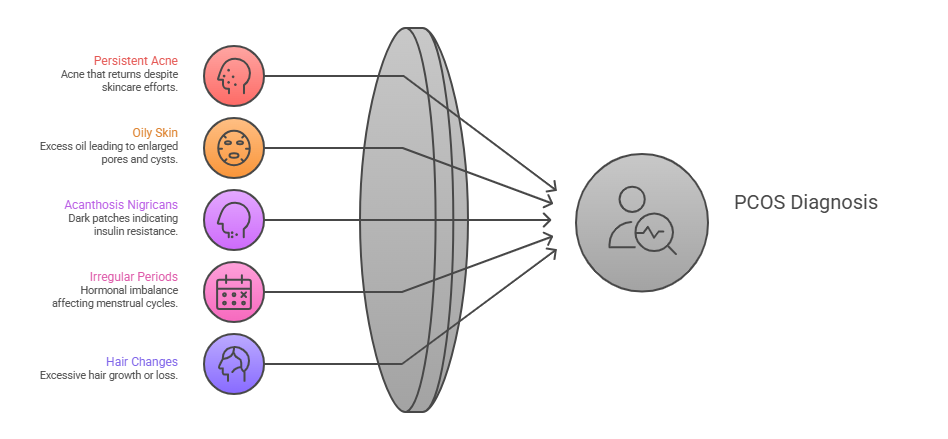
- Very irregular periods: cycles shorter than about three weeks or longer than six weeks, or fewer than eight periods in a year.
- Missed periods for months without pregnancy (secondary amenorrhoea)
- Very heavy or prolonged bleeding that leaves you exhausted or anaemic.
Why it matters:
- Irregular cycles often mean your ovaries are not releasing an egg (anovulation), which is a classic sign of PCOS and a key reason for difficulty conceiving.
- Long‑term, too few periods can increase the risk of endometrial problems, so “waiting it out” isn’t always safe.
Sign 2: Unwanted Facial/Body Hair + Thinning Scalp Hair
If your mirror has become a daily stress point, pay attention to these patterns:
- New or worsening coarse, dark hair on:
- Chin and upper lip
- Chest, stomach, back or inner thighs (hirsutism)
- Thinning hair on the scalp, widening hair parting or hair loss resembling male‑pattern baldness.
- These changes often appear alongside irregular cycles and acne, tied back to excess androgens in PCOS.
Why it matters:
- Many women try to “fix” this cosmetically with waxing and laser alone, without checking the underlying hormone imbalance.
- Treating PCOS at the root often improves hair patterns over time, especially when insulin resistance and weight are addressed together.
Sign 3: Stubborn Adult Acne and Oily Skin
Breakouts that don’t behave like normal teenage acne are another red flag.
- Persistent acne along the jawline, chin, lower face and back that keeps returning despite good skincare.
- Very oily skin, enlarged pores and painful cystic pimples.
- Dark, velvety patches on the neck, armpits or groin (acanthosis nigricans), often linked to insulin resistance.
Why it matters:
- PCOS‑related acne is driven by a mix of excess androgens and insulin resistance, so only creams and facials rarely give lasting relief.
- When acne shows up together with irregular periods or hair changes, doctors strongly recommend ruling out PCOS rather than treating skin in isolation.
Sign 4: Sudden, Stubborn Weight Gain
If your weight feels “stuck” no matter what you try, it may not be a lack of discipline; it may be hormones.
- Gradual weight gain, especially around the tummy, hips and thighs, without major changes in diet.
- Very slow or minimal weight loss despite exercise and calorie control.
- Constant fatigue, carb cravings and energy crashes throughout the day.
Why it matters:
- PCOS is strongly associated with insulin resistance, making it harder for the body to handle sugar and predisposing to type 2 diabetes and metabolic syndrome.
- Studies from India show high PCOS prevalence in urban women, where lifestyle, stress and diet intensify insulin resistance and weight challenges.
Sign 5: Trouble Conceiving and Emotional Ups & Downs
Fertility and emotional health are often where PCOS hits hardest.
- Difficulty conceiving despite regular attempts and normal partner reports, because irregular ovulation reduces your fertile windows.
- Higher risk of miscarriage and pregnancy complications if PCOS and insulin resistance are not managed before and during pregnancy.
- Mood swings, anxiety, low self‑esteem and depressive symptoms are linked to chronic symptoms like acne, weight gain and hair changes.
Why it matters:
- PCOS is one of the leading causes of anovulatory infertility worldwide, but timely lifestyle, medical and integrative therapies can dramatically improve outcomes. Mental health support is an essential part of PCOS care; treating hormones without addressing how you feel keeps the healing incomplete.
When Should You See a Doctor?
If you recognise yourself in more than one of these signs, don’t wait for things to “settle down on their own.”
- Seek a proper evaluation if you have:
- Long‑term irregular or absent periods
- Unwanted facial/body hair or scalp hair thinning
- Persistent adult acne and dark skin patches
- Unexplained weight gain or difficulty conceiving.
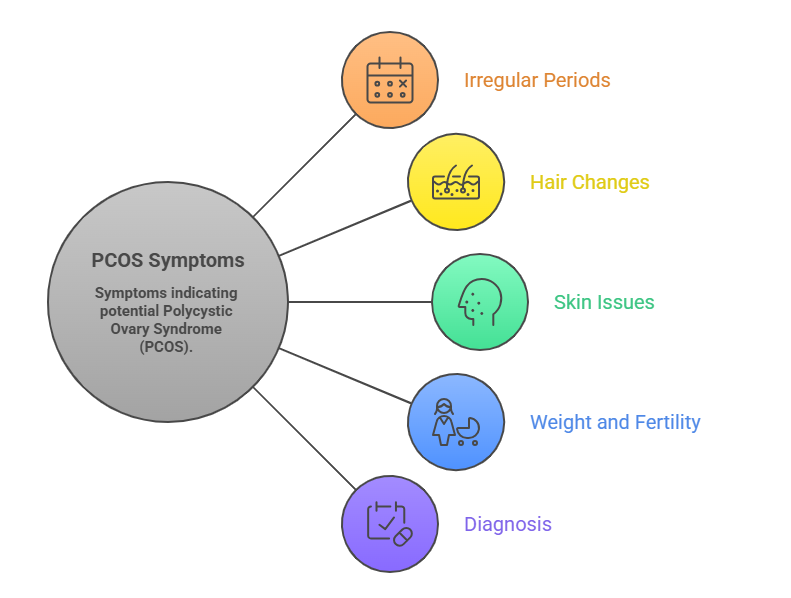
- Diagnosis usually involves:
- Detailed symptom history
- Hormone and metabolic blood tests
- Ultrasound of the ovaries.
- Avoid self‑diagnosing PCOS purely from social media checklists; conditions like thyroid disorders or other endocrine issues can mimic similar symptoms.
How Vedic Suttra Helps Women With PCOS
For readers in and around Noida, you don’t have to navigate this alone.
- Vedic Suttra Ayurvedic Centre focuses on root‑cause healing, combining classical Ayurveda with modern technology for deeper, faster results.
- Under Senior Ayurvedic Physician Dr Anu Jaiswal, Techno‑Ayurveda therapies blend Marma treatments with PEMF (pulsed electromagnetic field) therapy to support hormone balance, circulation and cellular healing.
- Women with PCOS‑related issues, irregular periods, weight gain, fatigue, skin and hair concerns, can benefit from:
- Personalised Panchkarma plans
- Diet and lifestyle counselling
- Ayurvedic formulations aimed at hormonal and metabolic balance.
If your body has been whispering these signs for a while, let this be your nudge: listen, ask questions, and take the first step toward holistic, compassionate care. Your future self will thank you.