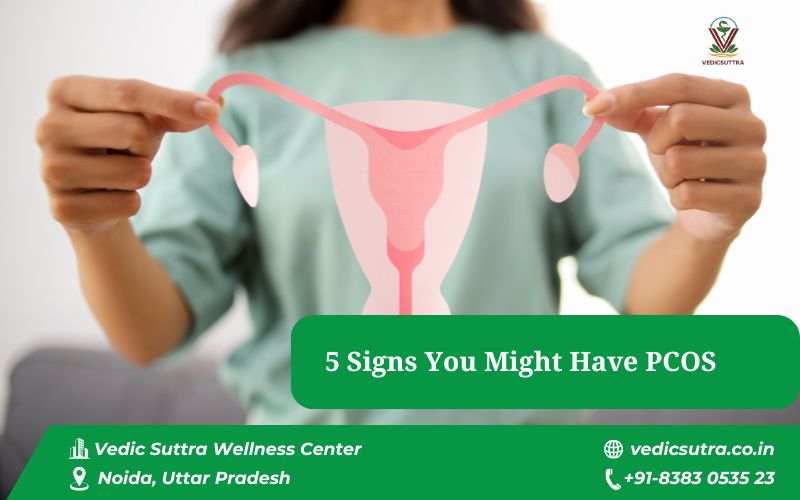
Your body is indicating that you have PCOS
Do you get super worried because of late and irregular periods?
Well, you are not alone in this case. In India, approximately 1 in 5 women may be facing this issue.
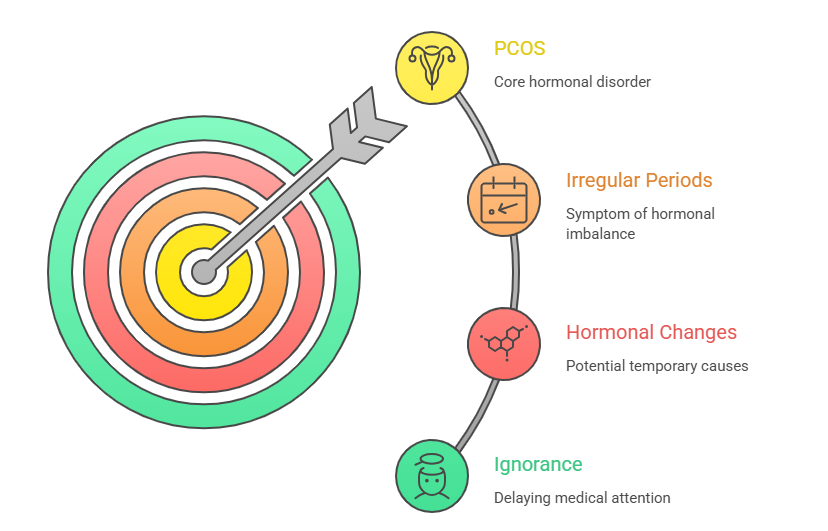
You may be ignoring it, thinking that it might be because of some hormonal changes, or that it is just a one-time thing, but your ignorance can cause you much more trouble.
Irregular periods or late periods are not something that happens normally.
One main reason behind this could be PCOS (Polycystic Ovary Syndrome), which is one of the most common hormonal disorders and is becoming increasingly common nowadays.
What is PCOS?
Polycystic Ovary Syndrome (PCOS) is a common hormonal disorder that is increasingly seen among women nowadays.
It is a health condition where the ovaries produce higher levels of androgens, which are basically male hormones. This hormonal imbalance interferes with ovulation, which then leads to irregular periods and many other health issues.
Ayurveda says PCOS is a health condition that involves Artava Dhatu (female reproductive tissues), aggravated Kapha, disturbed Vata, and weakened metabolic processes.
Kapha in our body is responsible for strength, immunity, stability, and growth, and Vata is responsible for blood circulation, movement of nutrients and waste, and nervous system activity.
When Kapha and Vata get disturbed, the imbalance can cause issues like insulin resistance, blockage of reproductive channels, weight gain and obesity, irregular menstrual cycles, delayed or absent ovulation, and irregular flow of menstruation, causing hormonal disturbances and leading to PCOS.
While the exact cause of PCOS remains unclear, VEDIC SUTTRA believes that factors such as genetics, insulin resistance, obesity, chronic inflammation, and lifestyle habits are known to contribute to its development.
Signs of PCOS
Irregular or Missed Periods
We know that every month, our hormones prepare the uterus for pregnancy by thickening its lining, but when pregnancy does not occur, hormone levels drop to a certain level, causing the shedding of the uterine lining, which leaves the body through the vagina as menstrual bleeding, also known as periods.
But when a woman experiences delayed periods, missed periods for months, or an unpredictable menstrual pattern, then it could be one of the symptoms of PCOS.
This usually happens because of hormonal imbalances that prevent the ovaries from releasing eggs regularly, leading to irregular ovulation.
Ayurveda says this happens when there is an imbalance of Vata and Kapha doshas. It leads to hormonal disturbances, and when our digestion becomes a bit weak, it leads to the formation of Ama, a metabolic toxin that disturbs Artava Dhatu (the female reproductive tissue), causing an imbalance in the overall menstrual cycle.
Difficulty in losing weight Or Unexpected weight gain
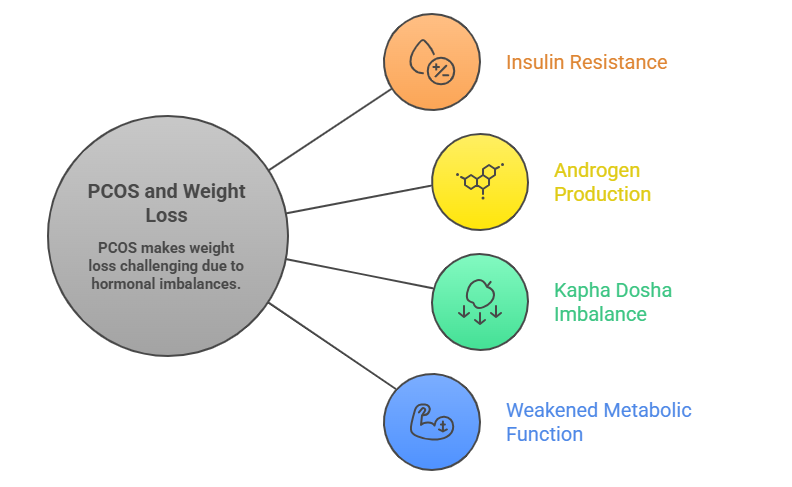
If you are someone who is trying her best to lose weight but still is not able to do it, despite doing every exercise and eating clean, then there is a chance that you have PCOS, as it’s one of the most common PCOS symptoms in females.
In PCOS, women find losing weight quite challenging, as the body becomes resistant to insulin, affecting blood sugar regulation, which then leads to sudden weight gain, difficulty in losing weight, and increased sugar cravings.
This increase in insulin can stimulate the ovaries to produce more androgens, which can automatically worsen your PCOS symptoms.
Ayurveda says difficulty in weight loss is associated with an imbalance of Kapha dosha and weakened metabolic function.
When Kapha gets aggravated, it leads to water retention, low energy levels, and a sluggish metabolism, which leads to difficulty in losing weight.
Excessive Facial Hair Growth or Hair Loss
This is one of the most common symptoms in women suffering from PCOS.
You may notice that over the past few months, your hair has been falling excessively, along with excessive hair growth on the face, hands, chest, abdomen, and other parts of the body. Some women may also experience a female pattern of hair loss.
All this happens when androgen levels increase in the body, causing these small yet noticeable changes.
Ayurveda says that this happens when the doshas become imbalanced and affect the nourishment of tissues that are responsible for healthy hair growth.
Oily Skin and Too Much Acne
If you have crossed your teenage years and are now experiencing adult acne, then there is a chance that it might be because of PCOS.
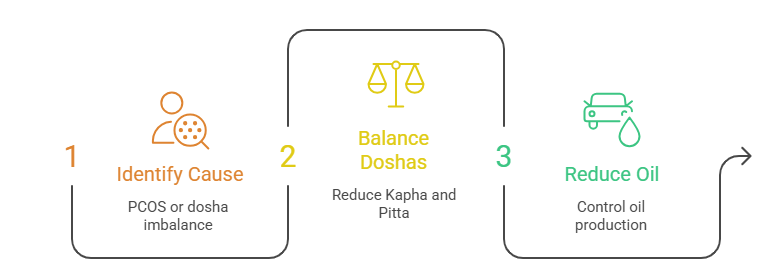
Higher androgen levels increase oil production in the skin, which then leads to oily skin, breakouts around the jawline and chin area, acne on the cheeks and forehead, and deep cystic pimples.
Based on Ayurvedic studies, an imbalance of Pitta and Kapha doshas can cause oily skin and acne.
Excess Kapha contributes to increased oiliness, clogged pores, and the accumulation of impurities in the skin. On the other hand, excess Pitta increases heat and inflammation in the body, which makes the skin more prone to redness, acne breakouts, and irritation.
Fertility challenges or difficulty in pregnancy
Difficulty conceiving is one of the most common concerns among women with PCOS.
Since PCOS can interfere with normal ovulation, the ovaries may not release an egg regularly each month.
Without regular ovulation, the chances of conception can decrease, making it more difficult to become pregnant, and Women usually face this challenge and think why am I having a hard time getting pregnant.
According to Ayurveda, reproductive health depends on the proper functioning of Artava Dhatu and balanced doshas. When these factors are disturbed, fertility may be affected. Therefore, if you have been trying to conceive without success, it may be worthwhile to evaluate whether PCOS could be an underlying cause.