
Ayurvedic Treatment for Migraine
Feeling that your head is being squeezed, about to burst, or that someone is drilling into your head? Well, it is not a normal headache; it is a migraine.
But don’t worry, it can be treated with Ayurvedic treatment.
Migraine headache is not a normal headache, it is 10X worse than that. Many people who start having early symptoms of migraine confuse it with a normal headache and begin treatment only when it gets worse.
In this guide, everything is mentioned, from symptoms to causes to Ayurvedic treatment, so you will not end up suffering.
What is migraine?
According to Ayurveda, migraine is not just a headache that is triggered by small things, it is much more than that.
In Ayurveda, migraine is known as Ardhavabhedaka, which means a pain that feels like it will split the head in half, and that is exactly how a migraine feels.
The three energies, which are Vata, Pitta, and Kapha doshas, control our body, and migraine usually occurs when Vata and Pitta doshas become imbalanced.
Because of this imbalance, the normal functioning of the brain and blood flow in the head get disturbed, which creates a deep, throbbing pain that can feel unbearable.
Also, toxins called Ama build up in the body and block the channels in the head, making the pain worse over time.
Ama is a toxin that forms when your digestion is not strong. So, along with Vata and Pitta doshas, digestion and Ama are also responsible for triggering migraine attacks, increasing their frequency, and making the symptoms more intense if not properly managed.
Symptoms of migraine
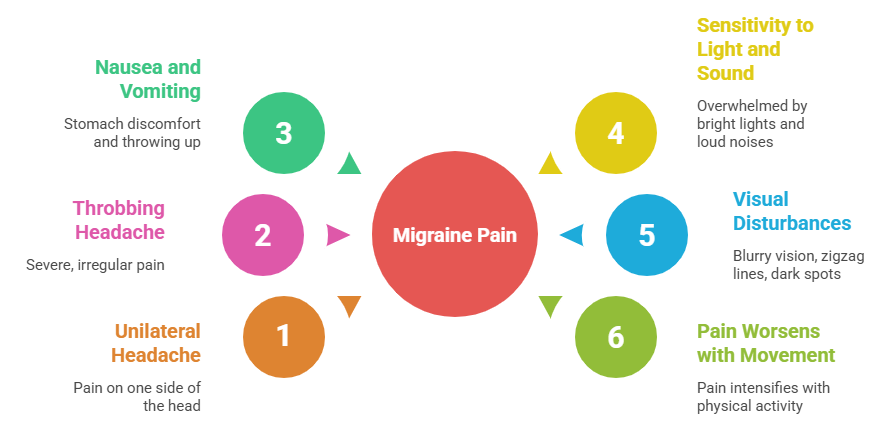
Migraine pain on one side of the head
The symptom is in its name. “Ardhavabhedaka” means pain on half of the head.
Severe throbbing headache
Vata controls the nerve activity and movement in the body, and imbalance of Vata can cause throbbing and irregular pain in the head.
Nausea and vomiting
The Pitta dosha, which is related to the stomach, when imbalanced can cause nausea and vomiting, making the migraine worse and causing more weakness.
Sensitivity to light and sound
When Pitta increases in the head, the senses become more sensitive than normal, and light starts feeling too bright, and even a normal sound may feel loud, triggering more pain.
Visual disturbances
For some people, visual disturbance starts before the pain of migraine. Their vision gets blurry, they start seeing zigzag lines or dark spots, and it may get worse with the pain.
Pain gets worse with movement
If you sit, stand, move, or even tilt your head or neck, the pain may get worse. It may feel like someone is drilling into your head, or even more intense migraine.
What causes of migraine
Stress and mental pressure
According to doctors, the most common cause of migraine is stress and mental pressure. If you overstress your mind, your brain becomes sensitive and overactive, triggering migraine whenever you take even a little stress.
According to Ayurveda, stress disturbs Vata, which triggers nerve activity, and Pitta gets affected, adding intensity and heat. All these things combine and cause migraine.
Lack of sleep
Not taking proper sleep can also trigger migraine. As lack of sleep can increase vata, which can affect calmness. And the imbalance of vata can make the nervous system weak and more reactive. As a result even small things can trigger migraine.
Poor eating habits
Skipping meals or not eating properly can cause an imbalance in Vata and Pitta doshas, leading to digestion issues. This can generate a toxin called Ama that can block channels in the body and trigger migraine.
Certain food and drinks
Food items that are too spicy or too sweet, or contain caffeine, can also trigger migraine, as they can disturb the body’s balance.
According to Ayurveda, such food items can increase heat in the stomach and sometimes cause indigestion, leading to an imbalance in Pitta. This makes the head more sensitive and can trigger migraine.
Hormonal changes
Hormonal changes can affect how the brain responds to different situations. This is common during periods, pregnancy, or menopause. These changes make the body more sensitive and can trigger migraine.
In Ayurveda, this is linked to changes in Pitta and Vata balance,which affect both the body and mind, increasing the chances of headache during certain times.
Dehydration
Not drinking enough water can affect the brain and overall body function. Dehydration reduces proper blood flow and can trigger headache.
In Ayurveda, lack of fluids increases dryness in the body, which aggravates Vata. This imbalance affects the head and nervous system, increasing the chances of migraine and making the pain feel more intense.
Ayurvedic Treatment for Migraine
Panchakarma Therapy
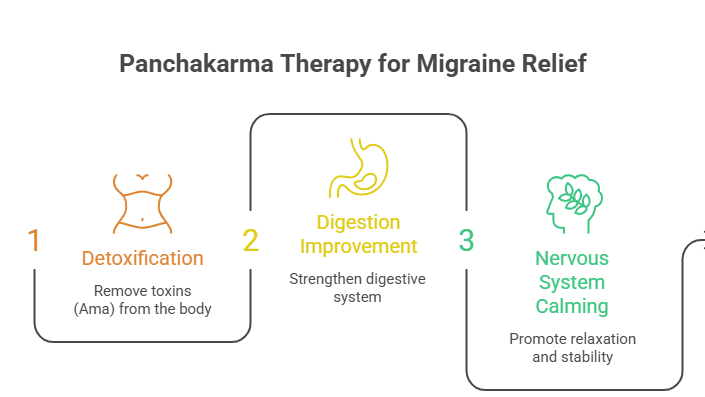
Panchakarma is an Ayurvedic detox treatment that helps remove toxins called Ama from the body and bring the doshas back into balance. When toxins build up, they block the body’s channels and can trigger problems like migraine. By clearing these toxins, Panchakarma helps the body function properly and reduces the chances of repeated migraine attacks.
It also improves digestion, which is very important because weak digestion is one of the main reasons for toxin buildup. Along with that, it calms the nervous system and helps the body feel more relaxed and stable.
Key Benefits
It helps detoxify the body, improves digestion, and reduces the frequency of migraine over time.
Therapies Include
Abhyanga (oil massage)
A full body oil massage that helps improve blood flow, relax the body, and reduce stress, which provides migraine relief.
Swedana (steam therapy)
Steam therapy that helps open the body channels and remove toxins through sweat.
Virechana (detox cleansing)
A cleansing process that removes excess Pitta from the body and helps balance internal heat.